|
Having trouble reading this email? Click here for the web version. Still using Outlook Classic? Click here and learn how to switch to the latest version.
WEDDING ANNIVERSARIES
Rotary Onlinehttps://atlantawestendrotary.org
ROTARY CLUB OFFridays, 12:15 pm |
|||||||||||||||||||||||||||||||||||||||||||||||||||||||


| President | Victoria Seals, PhD |
| President-Elect | Christopher Hempfling |
| President-Elect | Debra Stokes |
| Immediate PP | Jared Evans |
| Vice President | Debra Stokes |
| Treasurer | Rose Caplan |
| Secretary | Neil Shorthouse |
| Public Image | Jared Evans |
Dec. 5, 2025
This Week’s Program
This week’s meeting will be a Club Assembly held on the Atlanta Technical College campus, offering members a chance to step back from our regular speaker schedule and focus on the business and direction of the Rotary Club of Atlanta West End. Club Assemblies are essential checkpoints in the Rotary year, providing space to review progress, assess priorities, and strengthen our internal alignment so that our service remains effective and resilient.
Members are strongly encouraged to attend in person. Topics may include upcoming service project ideas, memberhip social activities, and meeting schedule. Additionally, several important bylaw-guided items are looming for the upcoming annual business meeting in February. Our club must elect officers and directors for the 2026–2027 Rotary year by the last Friday in February. One month before elections, members nominate candidates for president, president-elect, secretary, treasurer, and any open director positions. We invite members to consider how they plan to serve. The annual business meeting will also include a mid-year financial report, which includes current and previous fiscal year income and expenses. The board is required to receive quarterly updates on the financial condition of the club at its meetings. The mid-year financial report is for the benefit of the membership. Upcoming dates for the meetings of the board of directors may also be discussed.
Your participation ensures our club remains member-driven and mission-focused. Please join us at Atlanta Technical College as we plan, collaborate, and chart the next chapter of service for AWER.
JOIN ONLINE: Zoom Link - Click hereMeeting ID: 874 0116 4307 Passcode: Service
KeyWay Report on Our Speaker
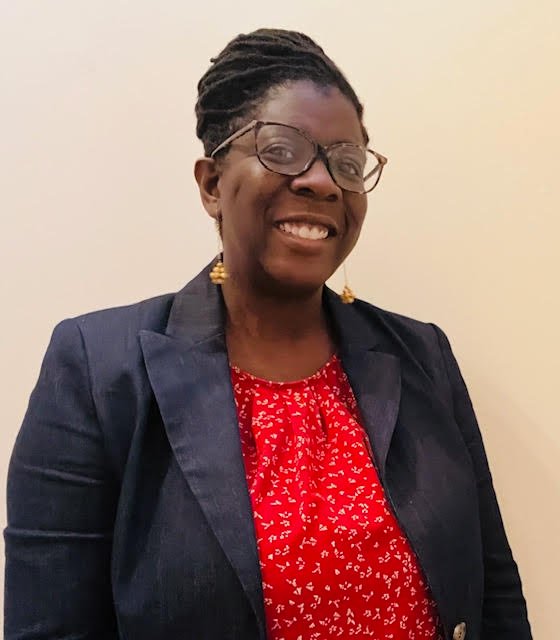
Dr. Temitope Aiyejorun Walker
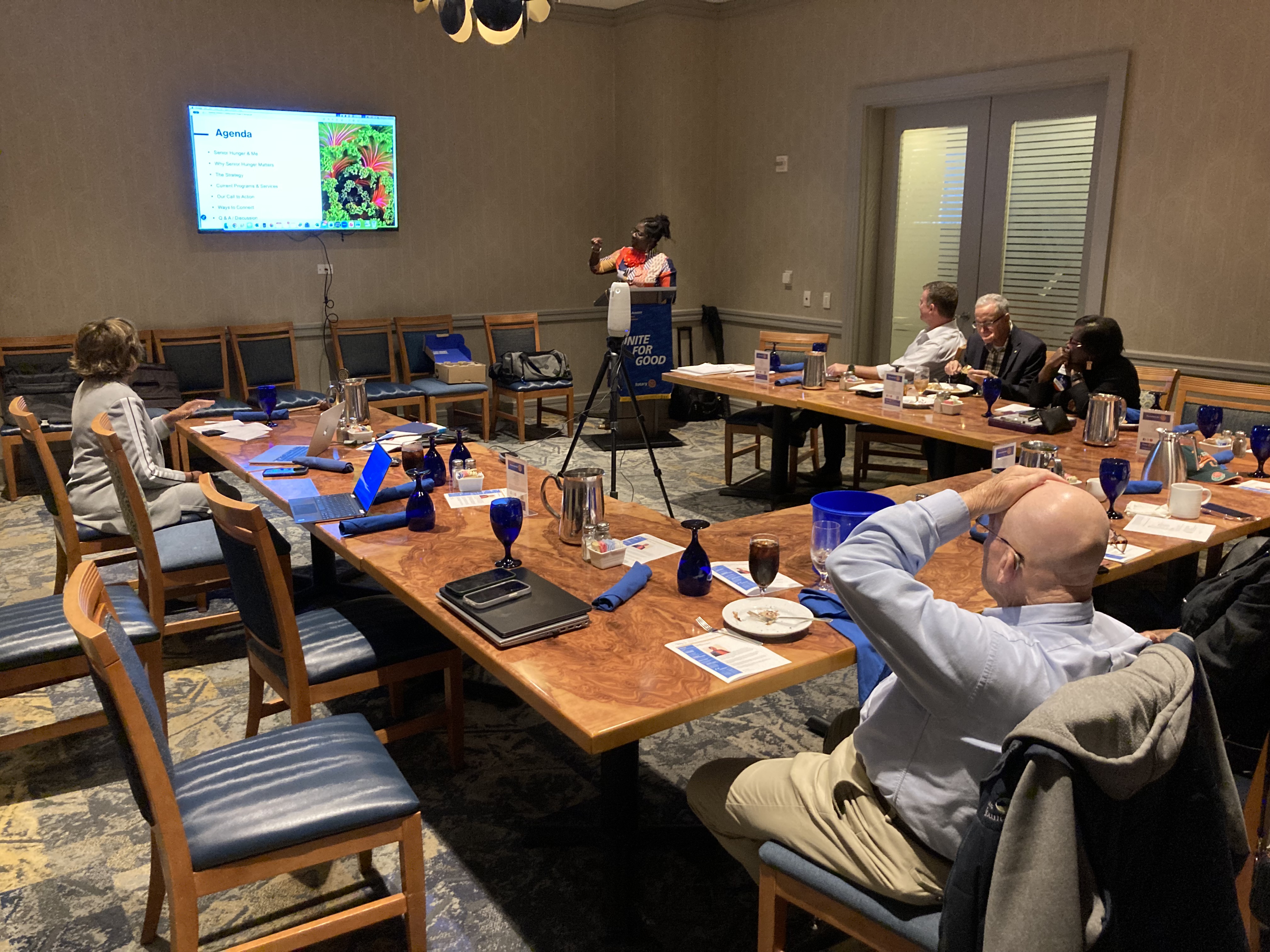
The Atlanta West End Rotary Club welcomed Dr. Temitope Aiyejorun Walker, Senior Hunger and Nutrition Coordinator for the State of Georgia, as the featured speaker. Co-President Elect Debra Stokes presided and introduced the program. Dr. Walker offered a clear, data-driven overview of senior hunger in Georgia and emphasized that addressing it requires coordinated action across income, health, mobility, and social factors.
Dr. Walker leads Georgia’s first State Plan to Address Senior Hunger within the Division of Aging Services at the Georgia Department of Human Services. She also serves as President of the Georgia Gerontology Society. Her professional background includes more than a decade examining the nutritional needs of low-income older adults, including doctoral research focused on SNAP-eligible seniors. Her academic path spans chemistry, biomedical sciences, and a Ph.D. in Foods and Nutrition with a gerontology certificate from the University of Georgia. She drew throughout her remarks on both research and statewide program implementation.
She began by clarifying core concepts that shape public understanding. Food insecurity refers to limited or uncertain access to enough food for an active, healthy life. Hunger describes the physical discomfort resulting from too little food. Malnutrition can affect individuals at any weight when their nutritional needs are unmet. Food security requires consistent access to nutritious food in a socially acceptable way that preserves dignity and choice. These distinctions matter because older adults enter food insecurity through different pathways, and solutions must address the underlying cause.
Georgia is home to nearly 2.5 million seniors, representing about one quarter of the state’s population. Approximately 8.5 percent, or roughly 191,000 seniors, are food insecure, and as many as 300,000 may be at risk when mobility limitations, medical costs, and social isolation are included. The senior population is diverse in needs and circumstances. Statewide data show that 36.6 percent of seniors are minorities, 12.1 percent live in poverty, 30.6 percent report a disability, 73.2 percent receive Social Security benefits, 79.3 percent own homes, and 37.9 percent live alone. Dr. Walker noted that these intersecting factors influence how quickly a change in health, income, or transportation can affect access to food.
She then outlined the main drivers of senior hunger. Economic pressures include fixed incomes, high medical costs, and limited savings. Health-related factors include chronic disease, depression, functional impairments, and cognitive decline. Access barriers include transportation challenges, rural and urban isolation, and limited availability of affordable grocery stores. Social factors include stigma around assistance and lack of awareness about available programs. Policy barriers include complex applications and reporting requirements that discourage participation. She added that homeownership can mask financial vulnerability because utilities, maintenance, and taxes can strain already tight budgets.
In response to member questions, Dr. Walker explained that food security in multigenerational households depends on how resources are shared among family members. She also clarified that dependency varies widely among older adults and is shaped by health, mobility, and available support rather than age alone. The COVID-19 pandemic illustrated how quickly access can shift when senior centers close and transportation options narrow.
Dr. Walker presented a three-part strategy focused on education, action, and access. Education requires ensuring that older adults and caregivers understand available programs and that agencies work to simplify applications. Action requires readiness to distribute food during crises such as storms or public health disruptions. Access involves collaboration among nonprofits, churches, health agencies, and Area Agencies on Aging. She emphasized that addressing hunger often requires addressing related needs. Reducing health expenses through Medicare counseling, for example, may allow a senior to reallocate funds toward food.
Her slides highlighted programs that support older adults, including congregate and home-delivered meals, SNAP and Senior SNAP, LIHEAP energy assistance, Medicare counseling, transportation services, and caregiver support. She encouraged members to become familiar with this network so they can guide seniors toward appropriate services.
She concluded by offering practical next steps for Rotarians. Members were encouraged to call the Aging and Disability Resource Connection at 1-866-552-4464, option 2; use aging.georgia.gov/locations to identify local Area Agencies on Aging; and direct seniors to gateway.ga.gov/access for SNAP, Medicaid, and utility assistance. She emphasized that awareness, connection, and guided support are meaningful acts of service aligned with Rotary’s mission.
--Jared Evans, KeyWay Reporter
December's Theme
Disease Prevention and Treatment
The Rotary focus for December is Preventing and Treating Disease, one of Rotary’s seven global causes. During this month, Rotary clubs highlight their efforts to fight diseases such as polio, malaria, and HIV/AIDS through initiatives like vaccination programs, medical missions, and improving sanitation and clean water access. Rotary’s most famous global effort is the fight to eradicate polio, with continued work toward achieving a polio-free world. Clubs also support broader health initiatives through screenings, training, and partnerships with local providers. Improving health infrastructure and promoting health education remain key strategies to help communities stay healthy and prevent disease.

Calander, Agenda, Connections, & Four-Way Test
MARK YOUR CALENDAR
Sign up to be a program chair here today! Mar. Apr. & June are vacant and need YOU! | Meeting Agenda
|